“Brief introduction of Coffee producing countries” search results (200)

Latest details of Yemeni Coffee A brief introduction to Mocha Yemeni Coffee
Although Ethiopia was the first country in the world to discover coffee, Yemen was the first country in the world to produce coffee as a crop on a large scale. In the 17th century, the first batch of Yemeni coffee was exported to Europe through the ancient port of Mocha, which is the origin of the name mocha coffee. Ethiopia, across the sea from Yemen, also sells coffee through the port of Mocha.
2015-11-30 Yemen Coffee latest details Mocha profile Ethiopia although the world
Brief introduction of Salvadoran Coffee introduction of Salvadoran Coffee Manor with washing treatment and Sun drying
A brief History of Coffee production in 1742, coffee was introduced to El Salvador from the Caribbean (1740). In the mid-19th century, El Salvador's original export pillar Indigo (one of the dyes) received a gradual decline in the development of synthetic dyes in Europe, and coffee gradually became the main export product under the guidance of the government. In 1856, the first 693 bags of coffee beans were shipped to Europe. all long
2016-07-12 El Salvador coffee profile washing treatment solarization drying manor producing area introduction
Brief introduction of coffee producing countries: Ethiopia
If the world coffee producing area is compared to a jigsaw puzzle, Ethiopia is definitely the largest piece in the center of the work. 1. Coffee, the hometown of Arabica and the source of coffee in the world, originated in Ethiopia. Quality coffee variety, Arabica coffee, the hometown of ta is Ethiopia. It is generally believed that coffee originated in Ethiopia
2014-09-03 Brief introduction of Coffee producing countries
Introduction to the treatment methods of planting varieties in the brief History of Costa Rican Coffee
Brief history of coffee the earliest time of introduction of coffee was in 1720 according to CR official data. Baidu data showed that 1729 of coffee was introduced from Cuba. In short, coffee has taken root in CR in the 18th century. It was first planted in the central valley (central valley). In the 19th century, the government vigorously promoted the cultivation of coffee, including the allocation of land as long as it was willing to cultivate coffee, and that it could become soil after five years of cultivation.
2016-08-01 About Costa Rica coffee brief history planting varieties treatment methods introduction
A brief introduction to the Flavor of Fine Coffee beans in the South American country of Venezuela the Bolivarian Republic of Venezuela
The distinctive manor coffee comes from this oil-rich country. Oil was once considered to be the main export of Venezuela. Although coffee trees were introduced from Martinique in 1730 and Venezuela, coffee production was almost abandoned at the height of the oil industry. Recently, coffee plantations have begun to recover, with the original planting of Tipica and
2016-01-14 American countries Venezuela boutique coffee beans flavor introduction Poly Val total
Brief introduction of coffee production in El Salvador
A brief History of Coffee production in 1742, coffee was introduced to El Salvador from the Caribbean (1740). In the mid-19th century, El Salvador's original export pillar Indigo (one of the dyes) received a gradual decline in the development of synthetic dyes in Europe, and coffee gradually became the main export product under the guidance of the government. In 1856, the first 693 bags of coffee beans were shipped to Europe. all long
2016-06-04 El Salvador coffee production introduction current situation
Indonesian Coffee introduces the country's brief History
A brief History of Coffee in 1696, the Governor of the Netherlands in Malabar, India, gave a batch of coffee seedlings to the Governor of the Netherlands in batavia in Batavia (present-day Jarkata in Jakarta). This was the first time that coffee was grown in Indonesia. However, the first batch of coffee seedlings were washed away by the flood. In 1699, Batavia received the gift again. This time, the coffee seedlings survived and came first in 1701.
2016-05-29 Indonesia coffee introduction country brief history 1696
A brief introduction to the characteristics of Rwanda Coffee Rwanda Coffee
Since the 1920s, Arabica coffee grown in Rwanda has been famous for its unique fruit sweetness and rich grass aroma. In recent years, the Rwandan government has taken positive measures to vigorously promote coffee production, set up coffee production cooperatives in various places, and give technical guidance and financial support to farmers, so that coffee production has made considerable progress. From Rwanda.
2016-03-23 Rwanda boutique coffee features profile last century 1920s beginning Lu
The characteristics of fine Rwandan coffee A brief introduction to the characteristics of coffee beans how much is a kilo of Rwandan coffee
Since the 1920s, Arabica coffee grown in Rwanda has been famous for its unique fruit sweetness and rich grass aroma. In recent years, the Rwandan government has taken positive measures to vigorously promote coffee production, set up coffee production cooperatives in various places, and give technical guidance and financial support to farmers, so that coffee production has made considerable progress. University of Rwanda
2016-05-04 Boutique Rwanda coffee characteristics coffee beans less money one jin introduction last century
A brief introduction to Mexican Fine Coffee beans the flavor of Mexican coffee in North America introduces the wonderful Mersey
Coffee from the world's fourth largest coffee producer, slippery and fragrant, Mexico, the fourth largest coffee producer in the world, produces about 5 million bags of coffee a year. Most of its coffee is produced by nearly 100000 small farmers, and large estates that once manipulated the coffee industry are rare. The yield of Mexican coffee is about 630 kg per hectare. Later, the Mexican Coffee Association (Instituto Mexicano)
2016-01-13 Mexico coffee beans profile American countries coffee flavor introduction wonderful
The oldest coffee, a brief introduction to Yemeni mocha coffee.
The oldest coffee in the world-- Yemeni mocha Coffee Origin: Yemeni Grade: excellent granule: full acidity: slightly sour and strong aftereffect, but also sweetness evenness: smooth roasting: moderate flavor: chocolate flavor, slightly alcoholic flavor. Spicy Ethiopia is the first country in the world to find coffee, but Yemen is the first country in the world to use coffee as a crop.
2014-10-14 Coffee knowledge ancient coffee Yemen mocha coffee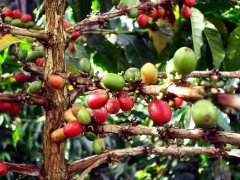
Costa Rican boutique coffee Costa Rica brief introduction to coffee beans
The particles are full, the acidity is ideal and the aroma is unique and strong. Tarrazu in Costa Rica is one of the major coffee producing areas in the world. The coffee produced is light and pure in flavor and pleasant in aroma. Costa Rica, with its fertile volcanic soil and good drainage, is the first country in Central America to grow coffee and bananas for commercial value. Coffee and bananas are the main food in the country.
2016-05-19 Costa Rica boutique coffee profile coffee beans granules fullness acidity ideal
A brief introduction to the producing area of Robusta Coffee in Vietnam
Today's production power, tomorrow's production giant. Perhaps under the influence of French colonial rule, coffee grown in Vietnam has a French flavor. Arabica coffee was first brought to Vietnam by French missionaries, and more than 400,000 coffee trees were introduced to Vietnam from 1865 to 1876 and planted near Tonkin Bay, mostly Java or bourbon varieties. At present, Vietnam's coffee production is increasing.
2016-01-18 Vietnam Robbins Coffee Origin profile Robes Booth Coffee beans production
A brief History of Coffee which countries in the world produce coffee
Costa Rica, Spanish La Republic de Costa Rica, English the Republic of Costa Rica, full name Costa Rica. San Jose, the capital, San Jose. The official language is Spanish. The administration is divided into 7 provinces, 81 counties and cities and 421 districts. In 1502, Columbus first discovered the coast of CR during his fourth voyage. Subsequently, Spain tried many times.
2016-05-25 Coffee brief History World which country production Costa Rica Spain
The practice of Costa Rican coffee beans A brief introduction to Costa Rican coffee beans
The particles are full, the acidity is ideal and the aroma is unique and strong. Tarrazu in Costa Rica is one of the major coffee producing areas in the world. The coffee produced is light and pure in flavor and pleasant in aroma. Costa Rica, with its fertile volcanic soil and good drainage, is the first country in Central America to grow coffee and bananas for commercial value. Coffee and bananas are the main food in the country.
2016-05-06 Costa Rica coffee coffee beans practices profiles granules fullness acidity ideal
A brief introduction to the knowledge of Fine Coffee in Yemen Moka Coffee
The oldest coffee in the world-- Yemeni mocha Coffee Origin: Yemeni Grade: excellent granule: full acidity: slightly sour and strong aftereffect, but also sweetness evenness: smooth roasting: moderate flavor: chocolate flavor, slightly alcoholic flavor. Spicy Ethiopia is the first country in the world to find coffee, but Yemen is the first country in the world to use coffee as a crop.
2015-02-10 Boutique coffee knowledge Yemen mocha profile the world's oldest oldest
A brief introduction to Yunnan Hougu Coffee Development status of Hougu Coffee in China
Hougu Coffee is the first local coffee brand in China. in addition, there are no other large-scale brands in China. Relying on the huge domestic consumer market and development potential, Hougu Coffee has good market development conditions. Hougu Coffee has a profound Chinese cultural heritage, absorbing the cultural traditions of Taoism and Confucianism. The meaning of Hougu comes from the moral Sutra, and the latter represents the king as the queen.
2016-03-02 Yunnan Coffee brief introduction Development status China
A brief Analysis of Yemeni Coffee introduction to other kinds of coffee
Isimarie: 1800'2 above sea level, ⒛ 0 meters above sea level, located in Bani Ismaili, the higher Ismail Highland in the Salzi producing area southwest of Matari, the breed is called Isimarie. Beans are a little more round than Matari (note that they are different from each other), but Isemary has the same flavor of Harald, Ponzi seems to be higher than Matari, and even has aromas of cardamom, tobacco and sunwood. Shallow
2015-02-11 Brief Analysis Yemen Coffee other species introduction Isse Mary altitude 800
A brief introduction and formation process of Java Coffee Sumatra Coffee
Java coffee is produced on the Indonesian island of Java and belongs to Arabica coffee. After baking, the bitter taste is extremely strong and the aroma is very light, without sour taste. The bitterness and mellowness of Java coffee, coupled with the sweetness of chocolate syrup, make Java coffee more mellow and palatable and very popular with women! Among the Asian coffee-producing countries, Indonesia is a very noteworthy one. Indonesia is a member of the Indian Ocean.
2016-03-08 Java coffee Sumatra simple introduction and formation process
A brief introduction to the varieties of coffee beans in Tanzania
Gourmet coffee has soft acidity and attractive aroma, which is absolutely worth enjoying. Coffee exports from Tanzania (Tanzania) play an important role in the whole national economy. Bean-shaped berry coffee is very productive and is said to be more fragrant than ordinary coffee. Generally speaking, the coffee beans in Tanzania have an extraordinary quality. For example, in the neighborhood of Kilimanja
2016-06-03 Tanzania coffee beans species profile introduction gourmet coffee acidity softness